

 Menu
Menu


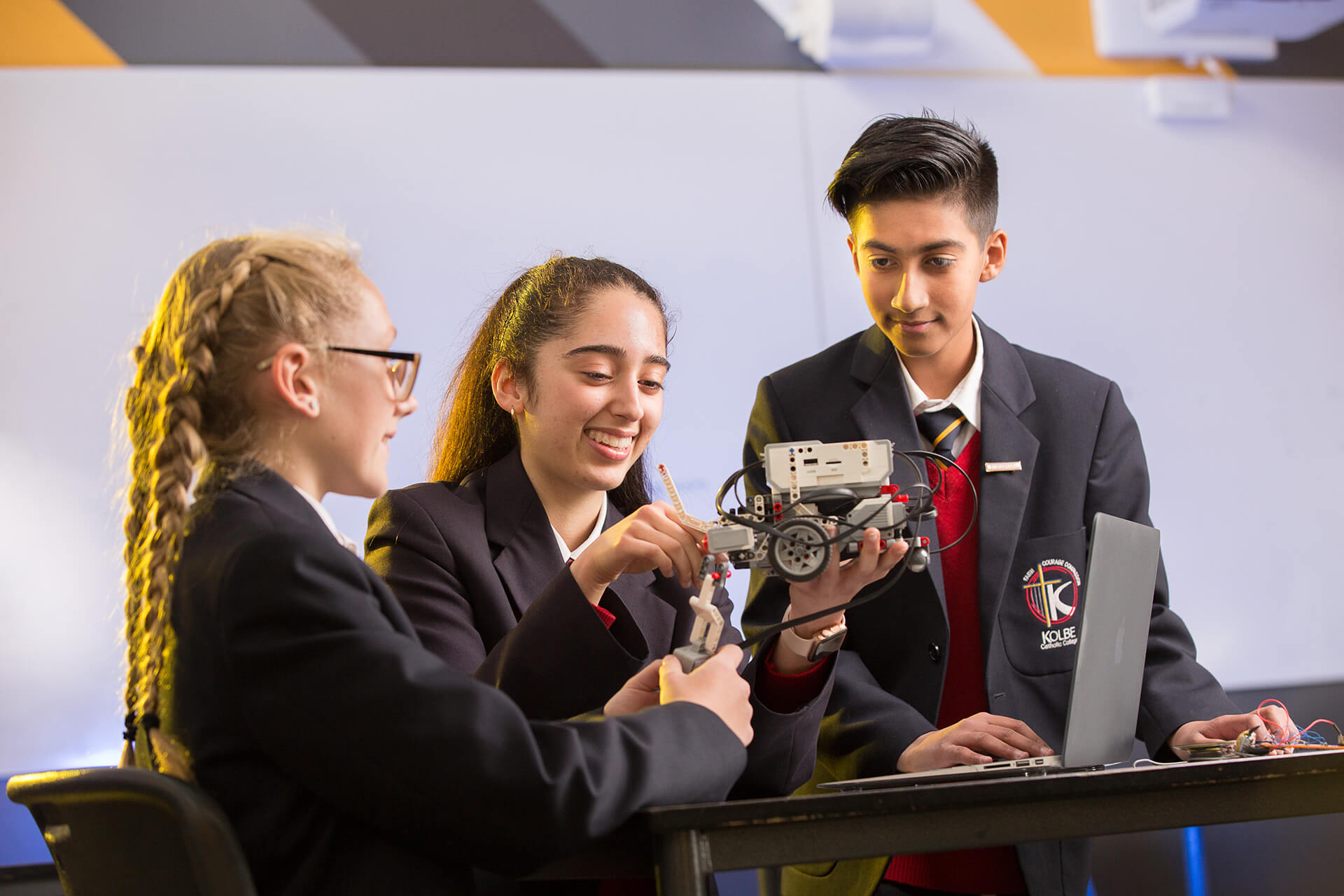


On the 21 April, the Victorian Space Science Education Centre welcomed Mission to Mars students for an excursion to replicate the surface of the red planet.
First, students were taken into the locker room where each person had an assigned jumpsuit to wear, which resembled the base layer of a space suit. Once everyone was in their suits, we were taken into a briefing room to have the mission explained to us and to be separated into two groups. Students, Declan Krizek and Maria Mechaeel tell us a little about it.
Mission Control
Mission control and the surface crew were the groups for the mission, and everyone had a different role, with a corresponding partner in the opposite group. The mission control room gave each person a desk with a monitor, binder with tasks for the mission, and tools that could be used to solve issues that arose. We found it fun but also challenging to talk to our partners without being able to see what they could, and everything had to be described. It was chaotic in the beginning when everyone was trying to grasp how to communicate, but soon after, we got the hang of it.
Surface Mission
On the surface, every astronaut had different responsibilities, but the main goal was to collect as many samples from Mars’ surface as possible before the evacuation which was called by the Mission Director. The reason the astronauts were collecting samples from Mars was to find out the big question of how Mars’ environment has changed overtime. However, each astronaut had to do activities before they started collecting samples, and these activities varied from person to person. For example, the Engineer had to set up an iPad with data about Mars’ surface, such as its temperature and windspeed. The samples each astronaut had to collect also varied, for example the biologist had to collect three carbonate/limestone samples for hydrochloric acid testing while the Geologist had to collect one opal sample and two carbon dioxide samples.
With the help of Mission Control, the astronauts were able to locate and collect all the samples they needed to, there were setbacks and times where samples were difficult to locate, but mission control and surface mission pushed through and had a very successful mission. Some astronauts commented on how heavy the suits were. After both groups had done the surface mission and been part of mission control, we went to the lab, where results from the mission were recorded and shared. This helped us to further understand trends that were found on the surface, and allowed an idea of age, environment, and other vital parts of the ecosystem that may have once existed on mars.
Going on the excursion was an amazing experience for everyone to grow closer and become better friends. We are grateful to have gotten the opportunity to go to mars and are thankful that VSECC were so kind and welcoming, this was a once-in-a-lifetime opportunity and it’s incredible that we had the experience.


- From the Principal
- Deputy Principal: Students
- Deputy Principal: Faith and Mission
- Deputy Principal: Learning and Teaching
- Deputy Principal: Operations
- MACS Policy Updates
- MACS Care - Child Safe Standards
- Mum-entous Occasion
- Standing Ovation
- Backstage Buzz - Performing Arts Update
- Nature's Classroom
- Cracking the Code
- Undefeated and Unstoppable
- Netting Success
- Sparking Curiosity
- Mission Control
- Stride Forward Program
- Year 12 Business Management
- Term 2 in Action - St Catherine Campus
- 2026 Sporting Academy
- Supporting Students For Exams
- Wellbeing Messages
- Student Voice in Action
- Careers Update
- Year 7 Camp


